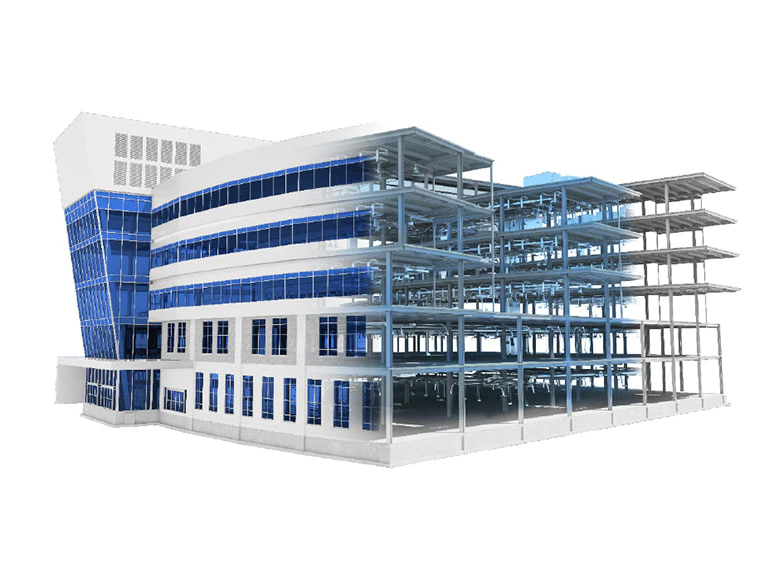
The Role Of Revit Structure In Modern Design

Revit Structure stands as a paramount tool in the realm of structural engineering, revolutionizing the way professionals approach building design and analysis. This blog aims to provide a comprehensive overview of Revit Structure, exploring its features, benefits, and how it has become an indispensable asset for structural engineers worldwide.

Understanding Revit Structure:

Building Information Modeling (BIM): At its core, Revit Structure is a BIM software that facilitates the creation of accurate and detailed structural designs. BIM goes beyond 3D modeling, incorporating data and information about the entire building process.
Integrated Design Environment: One of Revit Structure's key strengths lies in its integrated design environment. Architects, engineers, and contractors can collaborate seamlessly within the same platform, fostering communication and reducing errors.

Key Features and Tools:

Parametric Components: Revit Structure enables the creation of parametric components, allowing engineers to design with flexibility. Changes made to one part of the model automatically update throughout the entire project.
Analysis and Simulation: The software offers powerful analysis and simulation tools, allowing engineers to assess the structural performance of their designs. This includes stress analysis, load calculation, and more.
Documentation and Detailing: Revit Structure streamlines the documentation process. Users can generate construction documents, detailing sheets, and schedules with ease, saving time and ensuring accuracy.

Benefits of Revit Structure:

Efficiency and Collaboration: The collaborative nature of Revit Structure reduces communication gaps between team members. Changes made by one discipline are instantly reflected in the entire project, enhancing efficiency.
Visualization and Presentation: The 3D modeling capabilities of Revit Structure allow for better visualization of the project. Engineers can present their designs more effectively, aiding in communication with clients and stakeholders.
Data-Driven Decision Making: With BIM, Revit Structure facilitates data-driven decision-making. Engineers can analyze the impact of design changes on cost, schedule, and other project parameters, enabling informed decision-making.

Revit Structure in Action: Case Studies:

Showcase real-world examples where Revit Structure played a pivotal role in the success of structural engineering projects. Highlight how the software contributed to efficiency, accuracy, and collaboration.

Create design models

You can use Revit to model three-dimensional concrete reinforcement in a BIM environment. This program also has features for creating shop drawing documentation with bar bending schedules. A bar bending schedule is a document showing a list of structural members, bar marks, and reinforcement types used in a design.

Define workflows

Revit also enables you to connect steel design to detailed workflows. You can also use it to define your design intent for higher detail levels. Design intent refers to specifications on how you want structural parts of a building to appear to meet a client's needs.

Draft documentation

Revit offers features to create more accurate and detailed documentation of steel and concrete designs. You can include part dimensions in varying measurement systems and model elements as direct representations of a building's database. Creating accurate documentation with Revit can help you keep design specifications for future reference and share them with clients.

CANTER CADD being ISO 9001:2015 certified, the best CAD training institute can make a candidate’s profile strong and eligible to grab the trending jobs in the market. Moreover, the courses are offered by highly skilled and trained professionals to offer valuable knowledge to the candidates.
 Locate CANTER CADD – The Best ansys Training Institute in Hyderabad-Mehdipatnam-Ameerpet-Himayatnagar-Dilsukhnagar-Habsiguda-Boduppal-ECIL-Santoshnagar-Chandanagar-Alwal-Kukatpally-Secunderabad-Warangal-Hanamkonda, Bangalore-Marathahalli-BTMLayout-Electronic City-Yelahanka-Banashankari-JPNagar-Srinagar-Hulimavu-Chamrajpet-Horamavu-Vidyaranyapuram, Andhra Pradesh-Guntur-Nellore-Kurnool-Rajahmundry-Tirupati-Dwarakanagar-Vizag-Vijayawada, Delhi NCR-LaxmiNagar-RajendraPlace-Rohini-Adhchini-Kalu-Sarai-, Pune-Akurdi, Tamil Nadu-Coimbatore, Uttar Pradesh--Gazhiabad-Meerut, Kerala, , Mumbai, Nagpur.