


Introduction
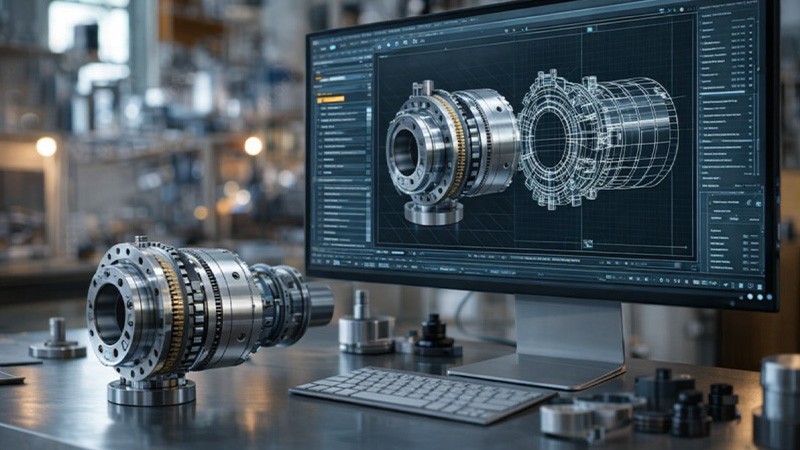
Mechanical CAD (Computer-Aided Design) has become one of the most important technologies in modern engineering and manufacturing. From automotive components to industrial machinery, Mechanical CAD software helps engineers create accurate, efficient, and production-ready designs.
In recent years, Mechanical CAD has evolved rapidly with the integration of Artificial Intelligence (AI), cloud technology, automation, simulation tools, and smart manufacturing systems. Today’s CAD platforms are no longer limited to basic drafting and modeling — they are becoming intelligent engineering ecosystems.
What is Mechanical CAD?
Mechanical CAD is software used to create, modify, analyze, and optimize mechanical designs digitally. Engineers use CAD tools to develop:
2D technical drawings
3D product models
Assemblies and mechanisms
Manufacturing-ready components
Simulation and analysis models
Mechanical CAD improves design accuracy, reduces manufacturing errors, and speeds up product development.
New Features in Modern Mechanical CAD Software
1. AI-Powered Design Assistance
Artificial Intelligence is changing the way engineers work with CAD software.
Modern AI Features Include:
Automatic design suggestions
Smart error detection
Design optimization
Auto-dimensioning
Intelligent modeling shortcuts
Material recommendations
Benefits:
Faster workflow
Reduced manual effort
Improved productivity
Better design quality
AI-assisted CAD tools help engineers focus more on innovation and less on repetitive tasks.
2. Cloud-Based CAD Collaboration
Modern Mechanical CAD systems now support cloud-based design collaboration.
Key Features:
Real-time team collaboration
Online project sharing
Remote design access
Version control systems
Cloud storage integration
Why It Matters:
Engineering teams can now work from different locations while collaborating on the same project efficiently.
3. Advanced Simulation Integration
Modern CAD software now includes built-in engineering analysis tools.
Integrated Simulations:
Stress analysis
Motion simulation
Thermal analysis
Vibration testing
Fluid flow analysis
Advantages:
Engineers can test product performance before manufacturing, reducing costs and development time.
4. Parametric and Generative Design
Parametric modeling allows designs to update automatically when dimensions or parameters change.
Generative Design Features:
AI-generated design alternatives
Weight optimization
Strength-based geometry creation
Material-efficient structures
Applications:
Aerospace components
Lightweight automotive parts
Industrial equipment optimization
This feature improves innovation and engineering efficiency.
5. Real-Time Rendering and Visualization
Mechanical CAD software now provides highly realistic product visualization tools.
New Visualization Features:
Photorealistic rendering
Real-time animations
AR/VR integration
Interactive product walkthroughs
Importance:
Clients and manufacturers can visualize products clearly before production begins.
6. Digital Twin Technology
Digital Twin technology creates virtual replicas of physical products or machines.
Capabilities:
Real-time performance monitoring
Predictive maintenance analysis
System behavior simulation
Operational testing
Industry Use:
Factories and manufacturing industries increasingly use Digital Twins for smart operations.
7. Additive Manufacturing Support
Mechanical CAD software is now closely integrated with 3D printing technologies.
Modern Features:
STL export optimization
Printability analysis
Support structure generation
Lightweight lattice design
Benefits:
Faster prototyping and reduced manufacturing costs.
8. Smart Manufacturing Integration
Industry 4.0 has connected CAD systems directly with manufacturing workflows.
Integrated Systems:
CNC programming
CAM tools
IoT-enabled manufacturing
Automated production systems
Outcome:
Design-to-manufacturing processes become faster and more accurate.
Emerging Trends in Mechanical CAD
AI-Driven Automation
CAD platforms are increasingly automating repetitive engineering tasks.
Eco-friendly and lightweight product development is becoming a major focus.
Multi-Platform Accessibility
Engineers can now access CAD tools across desktops, tablets, and cloud systems.
Virtual Reality Engineering
VR technology is helping engineers interact with complex machine assemblies in immersive environments.
Robotics and Automation Integration
Mechanical CAD is becoming essential for robotics design and automated industrial systems.
Benefits of Modern Mechanical CAD
Modern Mechanical CAD systems offer several advantages:
Increased design accuracy
Faster product development
Reduced production costs
Better collaboration
Improved innovation
Real-time testing capabilities
Efficient manufacturing integration
Conclusion
Mechanical CAD has evolved far beyond traditional drafting and modeling. Modern CAD platforms now include AI-powered tools, simulation systems, cloud collaboration, additive manufacturing support, and smart manufacturing integration.
These advanced features are transforming the engineering industry by improving productivity, reducing development time, and enabling smarter product innovation.
As industries continue adopting Industry 4.0 technologies, Mechanical CAD will remain a critical skill for engineers, designers, and manufacturers worldwide.
CANTER CADD being ISO 9001:2015 certified, the best CAD training institute can make a candidate’s profile strong and eligible to grab the trending jobs in the market. Moreover, the courses are offered by highly skilled and trained professionals to offer valuable knowledge to the candidates.
Locate CANTER CADD – The Best ansys Training Institute in Hyderabad-Mehdipatnam-Ameerpet-Himayatnagar-Dilsukhnagar-Habsiguda-Boduppal-ECIL-Santoshnagar-Chandanagar-Alwal-Kukatpally-Secunderabad-Warangal-Hanamkonda, Bangalore-Marathahalli-BTMLayout-Electronic City-Yelahanka-Banashankari-JPNagar-Srinagar-Hulimavu-Chamrajpet-Horamavu-Vidyaranyapuram, Andhra Pradesh-Guntur-Nellore-Kurnool-Rajahmundry-Tirupati-Dwarakanagar-Vizag-Vijayawada, Delhi NCR-LaxmiNagar-RajendraPlace-Rohini-Adhchini-Kalu-Sarai-, Pune-Akurdi, Tamil Nadu-Coimbatore, Uttar Pradesh--Gazhiabad-Meerut, Kerala, , Mumbai, Nagpur.