


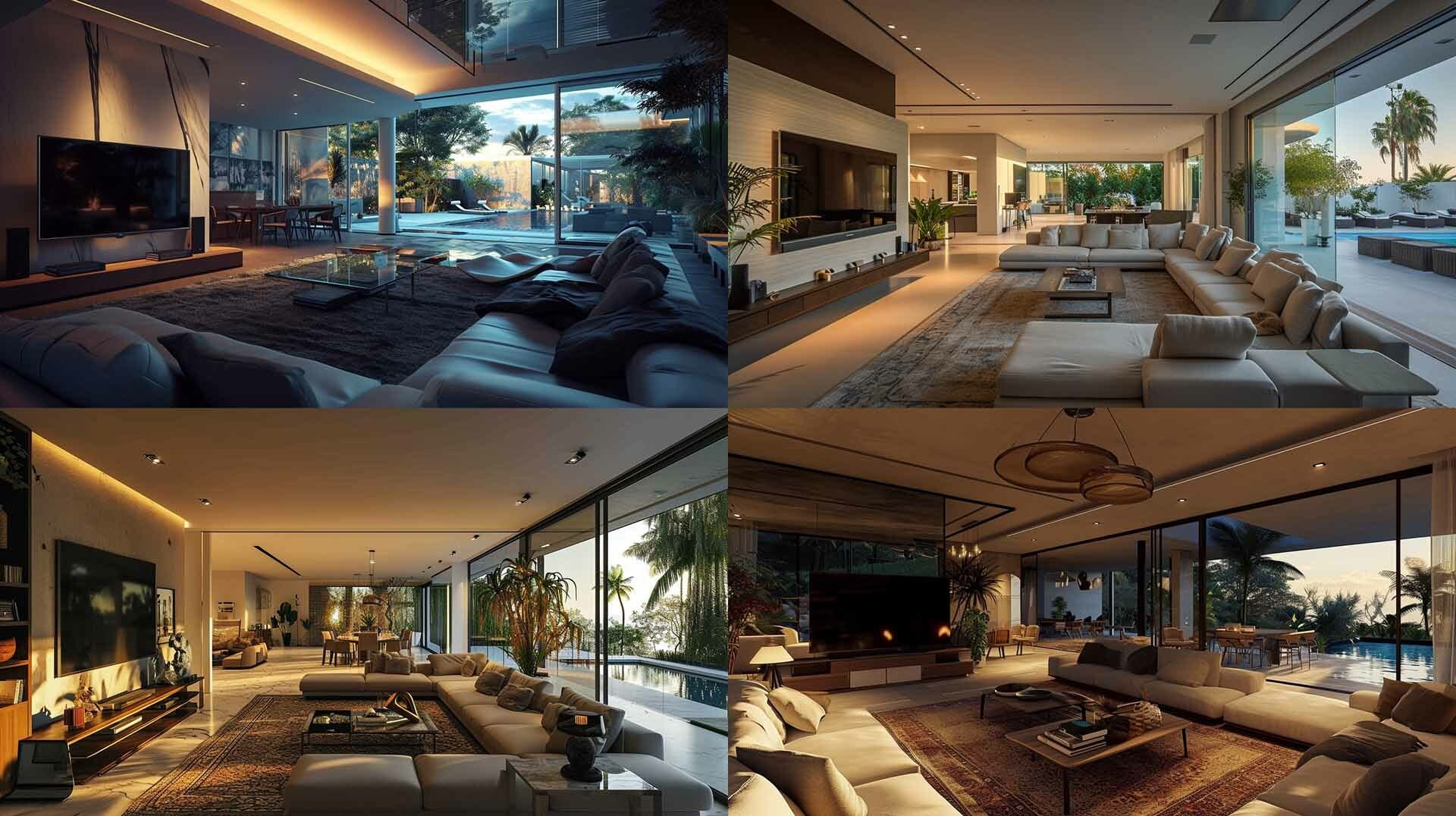
What Is AI rendering?
Artificial Intelligence Rendering is a groundbreaking technology that uses machine learning algorithms to accelerate the creation and generation of photorealistic images and animations.
Unlike traditional rendering, which relies on computational power to calculate light interactions with 3D models, AI leverages neural networks to make these calculations faster and more accurate. It's a great addition to architectural visualization, automotive design, VFX, and video game rendering workflows. This technology is setting new standards for speed, realism, and efficiency in computer graphics.
Understanding artificial intelligence
What is AI? Short for Artificial Intelligence, AI is a transformative field in computer science focused on creating machines that exhibit intelligent behavior. Unlike traditional computing methods that rely on pre-defined algorithms, AI utilizes machine learning, including unsupervised learning, to adapt and make decisions based on data.
In the realm of computer vision, graphics, and rendering, AI is a game-changer. It accelerates the creation of photorealistic images and animations by leveraging neural networks for faster, more accurate calculations. Widely applicable in industries like healthcare, finance, architectural visualization, and video games, AI is revolutionizing speed, efficiency, and realism across multiple sectors.
AI rendering: Helping solve design challenges
One of the primary challenges in architecture has always been effectively communicating design ideas. With AI, architects have an extra tool in their workshop to create and explore design ideas quickly and easily.
A new way of working
AI image generation tools such as Midjourney are making it easier for anyone to create architectural visualization without requiring extensive knowledge of 3D modeling and cutting-edge architectural rendering software. These tools allow clients to describe their architectural visions in natural language, and then they generate photorealistic images based on those descriptions. This simplifies the process of creating archviz, making it accessible to a wider range of individuals and organizations. Architects, designers, and archviz artists can then use this imagery as the basis for 3D models, which can be manipulated in a more traditional way.
Enhanced visualizations
AI rendering employs machine learning algorithms to generate lifelike images and animations significantly faster. It optimizes the calculations for light interactions, reflections, and textures, making photorealistic renders achievable in less time. These walkthroughs can be adjusted on-the-fly, offering instant visual feedback and making design variations easily explorable. By using AI rendering, architects and clients can also collaborate more efficiently.
AI rendering techniques
These techniques are primarily driven by neural networks and deep learning algorithms. Common methods include ray tracing, path tracing, and Monte Carlo simulations, which have been significantly optimized to return a more accurate and realistic AI render.
Fundamental principles of neural networks in rendering
At its core, neural networks mimic the human brain's ability to process data and recognize patterns.
In the context of rendering, neural networks can be trained to identify and predict optimal light paths, color gradients, and textures. Deep learning takes this a step further by using layered neural networks to analyze vast datasets, continually improving the algorithms for even more accurate results.
Applications in architecture
In the realm of architecture, various cutting-edge applications have emerged, shaping the way we design, plan, and preserve our built environment. Let's explore three key examples where artificial intelligence can make a profound impact:
Sustainable design
How can artificial intelligence rendering contribute to eco-friendly initiatives?
By optimizing energy-efficient designs and aiding in sustainable material selection, it can become a cornerstone in green architecture. The power of AI allows architects and clients to visualize eco-friendly design elements in photorealistic detail, helping to make sustainable choices more tangible and appealing.
Urban planning and development
Rendering techniques with AI offer a revolutionary way to simulate objects and visualize complex urban environments. This helps urban planners to evaluate potential infrastructure changes and engages communities by offering realistic visualizations of future developments.
Historical preservation
Although this is a really powerful tool that significantly helps architectural rendering, using AI can also be instrumental in the restoration and preservation of architectural heritage sites. By creating accurate, high-resolution renders from photos, it allows architects and restorers to preview and plan restoration activities, thereby ensuring that history is preserved with the utmost fidelity.
The current limitations of AI in architectural rendering
While AI offers a plethora of advantages, it's essential to acknowledge its present-day limitations. Here's a closer look:
1. A tool for ideation, not always for finalization
At its current stage, AI rendering excels as an ideation tool. It allows architects to rapidly visualize and iterate upon various design concepts. However, when it comes to producing the polished, consistent visuals often required for final presentations or client approvals, an AI render can sometimes fall short.
2. The quest for control and consistency
One of the key AI challenges with rendering solutions today is the balance between automation and control. While AI can produce good results quickly, architects may find they have less control over specific details compared to traditional methods. This can lead to inconsistencies in the final render, especially when the AI misinterprets certain design elements, styles, or intentions.
3. Predictability matters
In professional settings, predictability is paramount. Architects and designers need to know that the tools they use will deliver consistent results every time.
Presently, AI, with its learning and evolving nature, can sometimes produce varied outcomes for similar inputs. This unpredictability, while exciting in a creative brainstorming phase, might not always be suitable for final product delivery.
4. Learning curve
The adoption of rendering technologies with AI presents two major concerns: the learning curve and compatibility with existing workflows.
Understanding the AI tool is crucial; it's not just plug-and-play. However, comprehensive tutorials and courses are increasingly available to simplify this transition.
On the compatibility front, architects may face challenges integrating AI software with older, traditional architectural design tools. Upgrading to newer software versions or even complete platform shifts might be necessary. Despite these initial obstacles, the unparalleled advantages of AI-rendered architectural visualization make it a worthwhile investment.
Can architects be replaced by AI? The evolving role and future of architectural practice
In a world increasingly dominated by AI and machine learning, architects may wonder, "Can AI replace me?" The short answer is, not quite.
While AI-based rendering and design tools are revolutionary, they serve as supplements to, rather than replacements for, the human creative process. The evolving role of architects now requires fostering a harmonious synergy between AI technologies and human intuition, vision, creativity, and expertise.
AI can assist in repetitive tasks, data analysis, and even produce design drafts, but it lacks the nuanced understanding of human life experience, culture, and emotion that architects bring to the table. Therefore, architects should view AI as a collaborative tool rather than a threat, one that can amplify their capabilities.
To prepare for this paradigm shift, architects should invest in continuous learning, specifically in AI-related technologies and software, to better understand how they, as well as interior designers, can leverage these tools for more effective and creative design solutions.
CANTER CADD being ISO 9001:2015 certified, the best CAD training institute can make a candidate’s profile strong and eligible to grab the trending jobs in the market. Moreover, the courses are offered by highly skilled and trained professionals to offer valuable knowledge to the candidates.