


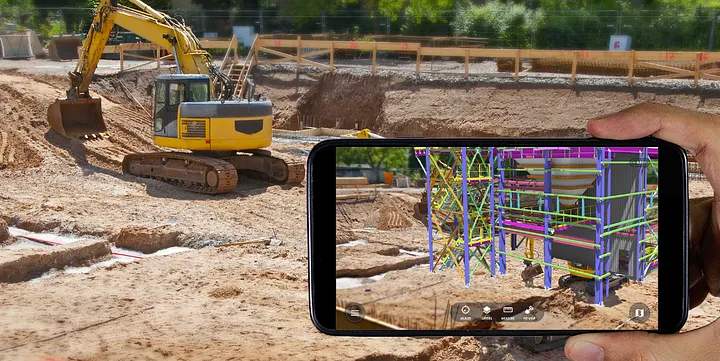
Civil engineers are responsible for designing, constructing, and maintaining the built environment, including buildings, roads, bridges, and other infrastructure. They work on a variety of projects, from small residential developments to large-scale public works projects.
Some specific responsibilities of a civil engineer might include:
Conducting site surveys and assessments to determine the feasibility of a project
Developing detailed plans and specifications for construction projects
Supervising the construction process to ensure that work is completed according to schedule and within budget
Testing materials and monitoring quality control during construction
Managing a team of engineers, technicians, and other professionals
Maintaining and updating records and documentation related to a project
Providing technical advice and support to clients and stakeholders
Working with architects and other design professionals to coordinate the design of a project
Ensuring that projects comply with all relevant laws, regulations, and codes
As you can see, there is a multitude of responsibilities that every engineer has on their plate. Staying abreast of technological advancements is important for civil engineers in order to improve the efficiency, effectiveness, and sustainability of their work and to stay competitive in their field.
1. BIM (Building Information Modeling)
This is a digital representation of the physical and functional characteristics of a building or infrastructure. BIM allows engineers to design, analyze, and visualize projects in a 3D environment, improving communication and coordination between design teams and reducing errors and rework. BIM enables multiple team members to work on a project simultaneously, improving communication and coordination among team members. It also allows stakeholders to review and approve designs more efficiently.BIM can help engineers design more sustainable buildings and infrastructure by allowing them to analyze the environmental impact of different design options and optimize for energy efficiency and other sustainability metrics.
New technologies can help civil engineers work more efficiently, reducing the time and cost of projects. It can enable civil engineers to do things that were not previously possible and are aimed at improving the sustainability of the built environment. Civil engineers who stay up-to-date with the latest technologies and innovations are likely to be more competitive in the job market and may have more opportunities for advancement within their organization.
2. Advanced materials
Engineers are constantly seeking out new and innovative materials that can be used in construction and infrastructure projects. These materials may have improved physical or mechanical properties, such as increased strength or durability, or they may have other desirable characteristics, such as improved sustainability or reduced maintenance requirements. Some examples of advanced materials that are being used or researched include fiber-reinforced polymer composites, self-healing concrete, and advanced ceramics.
They have developed a self-healing concrete system based on a vascular network containing a healing agent. Their technology requires no manual intervention post-installation, it increases the strength of concrete on day one and more than doubles its lifespan. The need to monitor and maintain infrastructure is reduced. The extension in lifespan reduces the volume of concrete utilized in the overall built environment, in turn reducing the negative environmental impact of construction itself.
3. GIS (Geographic Information Systems)
GIS is a system for capturing, storing, analyzing, and managing data and information about geographic locations. It is widely used in civil engineering for tasks such as mapping, land use planning, and infrastructure management. GIS allows engineers to analyze and visualize geographic data, helping them to make informed decisions about the location, design, and management of infrastructure projects.
At civils.ai, we are building up mapping the geology of major cities and creating tools to automatically digitize geotechnical reports so they are geospatially referenced. Soon enough, you will no longer need to dig through old pdf files of soil data and instead be a click away to uncover what lies beneath the ground surface.
4. 3D printing
3D printing, also known as additive manufacturing, is a process of creating a physical object by building it layer by layer from a digital model. This technology has the potential to revolutionize the construction industry by allowing engineers to create customized, on-demand components and structures. 3D printing can be used to quickly create prototypes of various components and structures, allowing engineers to test and evaluate different design options. Additionally, it allows for the creation of components and structures with minimal waste, as the material is added layer by layer rather than being cut or machined from a larger piece.
It is important to note that 3D printing is still in the early stages of development and there are a number of technical, economic, and regulatory challenges that need to be addressed before it can be widely adopted in the construction industry.
CANTER CADD being ISO 9001:2015 certified, the best CAD training institute can make a candidate’s profile strong and eligible to grab the trending jobs in the market. Moreover, the courses are offered by highly skilled and trained professionals to offer valuable knowledge to the candidates.